
The Fed Did Not Change Mortgage Rates and Here Is What Actually Drives Them Up and Down
The Misconception That Is Causing Buyers to Wait for the Wrong Signal
One of the most common mortgage rate misconceptions Josiah Burdge hears consistently is that when the Federal Reserve changes their rate mortgage rates will automatically follow. It sounds logical. It is not how it actually works and building a home buying strategy around that assumption can lead buyers to make decisions based on information that does not connect to the rates they will actually receive.
What the Fed Actually Controls
When the Federal Reserve adjusts their rate they are directly influencing the short-term cost to borrow money. This affects things like the prime rate, credit card rates, home equity lines of credit, and short-term lending between banks. These are real and meaningful effects on short-term borrowing costs across the economy.
Thirty-year mortgage rates operate on a completely different timeline and respond to completely different market forces.
What Actually Drives Thirty-Year Mortgage Rates
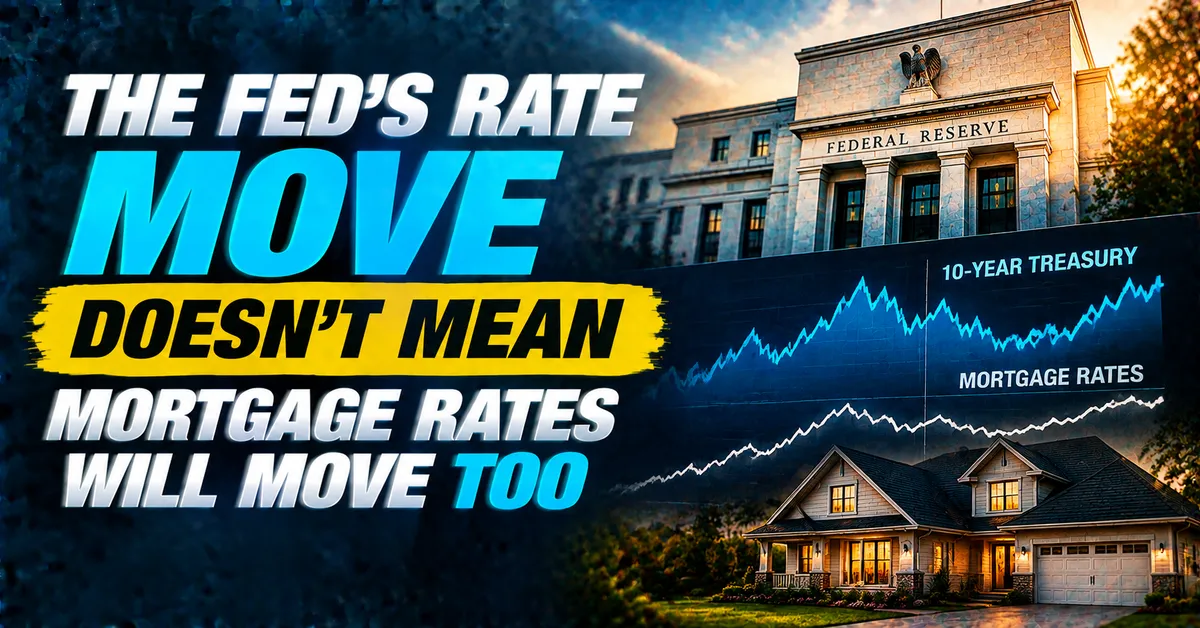
Long-term mortgage rates are driven primarily by the long-term bond market and specifically by the ten-year Treasury yield. The ten-year Treasury is the most closely watched benchmark for mortgage rates because both represent long-term commitments from the lender's perspective. When investors demand higher yields on ten-year Treasuries mortgage rates move higher alongside them. When yields fall mortgage rates have room to decline.
This is why the Fed can cut their rate and mortgage rates can actually move higher in response. The bond market is forward-looking. Investors are constantly pricing in expectations about inflation, employment data, economic growth, and what they think the Fed will do in the future rather than simply reacting to what the Fed just did. If the market interprets a Fed cut as a signal that could reignite inflation investors demand higher yields on long-term bonds to compensate for that risk and mortgage rates follow those yields upward.
What Buyers Should Actually Pay Attention To
If you are buying a home do not build your strategy around the next Fed meeting or your prediction of what the Fed might do. That signal does not connect directly to the rate you will actually receive on a thirty-year mortgage.
What matters is what is happening in the broader bond market and more specifically what rate and what payment are available for your specific situation today based on what the market is currently allowing. That is the number that determines your monthly payment, your qualification, and the financial reality of your purchase.
As Josiah Burdge notes the market is allowing a lot right now. The conversation about what that means for your specific situation is worth having before the next Fed meeting comes and goes.
Give Josiah Burdge a shout to find out what today's market is actually offering for your purchase or refinance.
Sources
FederalReserve.gov
TreasuryDirect.gov
MortgageNewsDaily.com
ConsumerFinancialProtectionBureau.gov
Investopedia.com